
Maintenance and Operation Services
Launching a connected product is not the end of the work; it’s the start of a much longer commitment.
Devices in the field need security patches as new vulnerabilities emerge, new features to stay competitive, and a response plan when something goes wrong. Customers expect the experience to keep getting better, not quietly degrade.
We help you keep your intelligent devices and systems up to date, secure, and enhanced with new features throughout their operational life: from delivering secure updates and diagnosing field issues, to deploying new functionality and managing component end-of-life risk before it becomes a crisis.
What our maintenance and operation services cover
The right level of ongoing support depends on your product, your team’s existing capability, and how much of this you want to manage in-house versus hand off entirely.
Some clients bring us in for a specific capability, secure update management, for example, while others rely on us for full lifecycle support across an entire deployed fleet.
The areas below reflect the full range of what we offer.
We’ll help keep your product up to date in the field
Management & maintenance
Ongoing software management and security maintenance are the foundation of keeping a deployed product reliable and safe over time. We manage software updates and apply consistent security maintenance practices across your in-field device estate, so issues are addressed proactively rather than reactively.
- Software management
- Security maintenance

Delivering and maintaining secure product updates
Secure updates
Delivering updates to devices already in end users’ hands or deployed across a network carries real risk if not managed properly. We deliver secure software updates, continuously monitor for emerging security vulnerabilities, and apply patches in a controlled, tested way that minimises disruption to your users.
- Secure update delivery
- Continuous vulnerability monitoring
- Patch and update application

Quick action to resolve failures in the field
Failure assessment and diagnosis
When devices fail in the field, understanding why, quickly and accurately, determines whether you resolve a manufacturing defect or repeat it across your next production batch. We assess and diagnose field failures, analyse returned units, and help resolve underlying manufacturing issues at the source.
- Failure assessment and diagnosis
- Field return assessment
- Manufacturing issue resolution
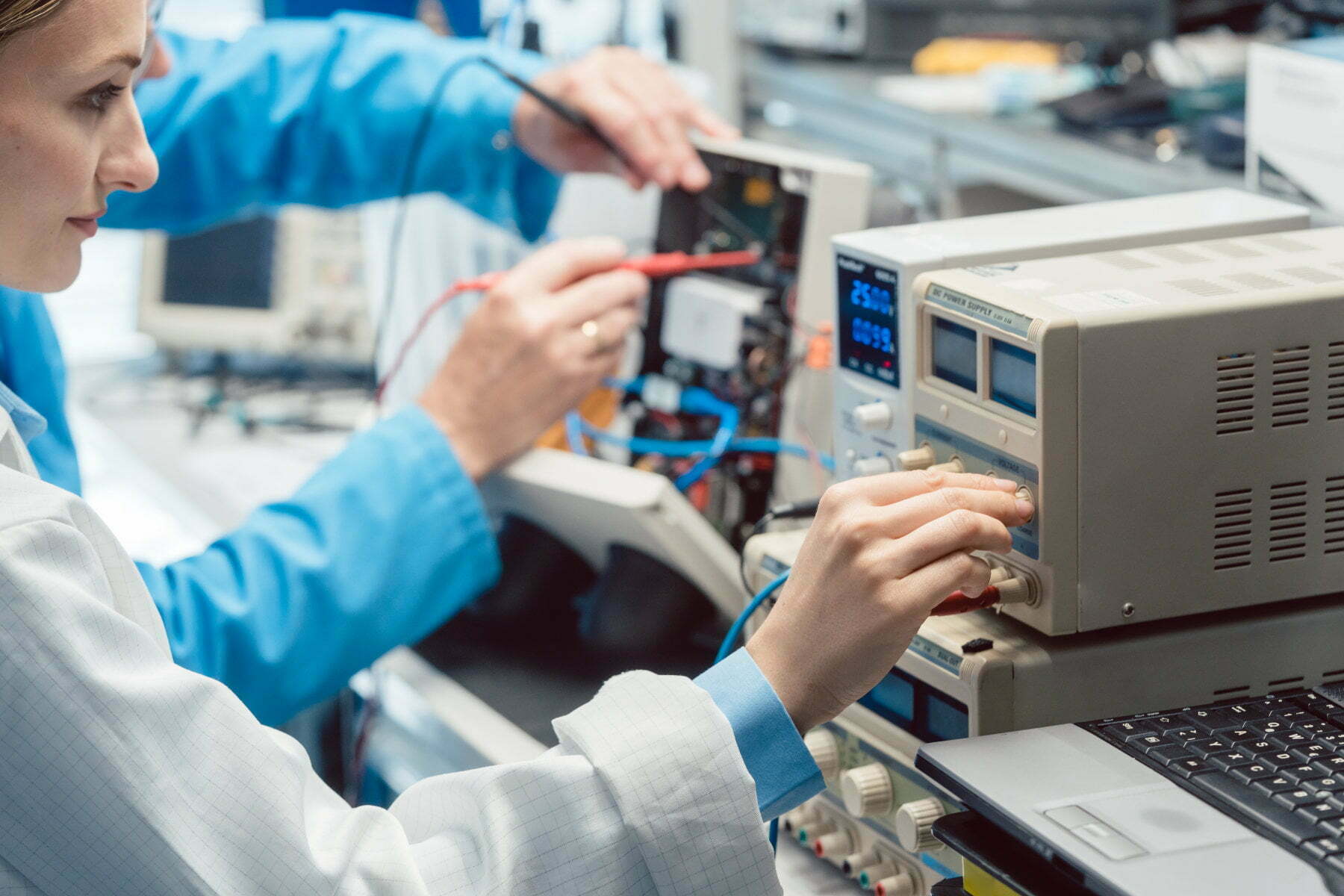
Understand bugs, issues and failures in the field
Remote diagnostics solutions
The best field issues are the ones you catch before a customer notices them. We deploy remote diagnostics capability across your device fleet, enabling preventative and pre-emptive maintenance backed by genuine data analysis, rather than waiting for support tickets to tell you something is wrong.
- Remote diagnostics deployment
- Preventative and pre-emptive maintenance
- Field data analysis

Continued innovation of existing in-field products
Deploying new features
A connected product that stands still gets left behind. We support the continued innovation of products already in the field, deploying new features and refreshing user interfaces to keep your product competitive without requiring a full hardware refresh cycle.
- New feature deployment
- User interface refresh

Make the most of legacy and old code bases
Optimising legacy code bases
Devices in the field often run on hardware specifications that looked generous at launch and considerably less so several years later. We optimise legacy software for memory footprint and CPU efficiency, extending the useful, performant life of your existing hardware rather than forcing a premature refresh.
- Footprint and CPU optimisation
- Legacy software support

Managing hardware maintenance
Component end-of-life management
Hardware components reach end-of-life on their own timeline, often without much warning, and rarely in sync with your product roadmap. We help you plan ahead, identifying second-source and alternative components, and building a structured plan for managing end-of-life risk before it disrupts production or support.
- Second-source component identification
- Alternative component assessment
- End-of-life planning
Why Consult Red for maintenance and operation?
Maintaining a deployed product well requires the same engineering depth that built it, not a generic support desk bolted on afterwards. Because we also design and develop connected products, our maintenance and operation work is grounded in genuine technical understanding of the platforms we are supporting.
What to expect

Initial assessment
We start by understanding your deployed product, your current support arrangements, and where the gaps or risks are, whether that’s security patching cadence, field failure rates, or an approaching component end-of-life issue.
There is no charge for this conversation.

Engagement model
Maintenance and operation support is typically ongoing rather than a fixed-term project.
We agree a scope that matches your needs, whether that’s a defined service level for security patching and updates, a project-based engagement to optimise legacy performance, or full lifecycle management across your device fleet.

Outcome
Your deployed products stay secure, perform well, and continue to deliver value to your customers and your business, extending the useful life of hardware already in the field rather than forcing premature replacement.
We are experts in intelligent product design and development
Some of the world’s biggest brands trust our team’s capabilities



Frequently asked questions
-
How often should connected devices receive security updates?
This depends on your product, its risk profile, and the regulatory environment it operates in, but the underlying principle is consistent: security maintenance should be continuous, not occasional.
New vulnerabilities are disclosed regularly, and devices without a clear process for monitoring and patching them accumulate risk over time.
Under emerging legislation such as the EU Cyber Resilience Act, manufacturers will face explicit obligations around vulnerability handling and update provision for the supported lifetime of a product.
-
What is the "Golden Window" and how does it extend device lifespan?
The Golden Window refers to the period during which a deployed device’s hardware can continue to deliver good performance if the software running on it is properly optimised, rather than being prematurely judged obsolete.
Through targeted software optimisation, footprint reduction, CPU efficiency improvements, and legacy code refinement, devices already in the field can often perform significantly better than their original specification would suggest, extending useful life and deferring costly hardware refresh cycles.
-
Can you help diagnose why devices are failing in the field?
Yes. Failure assessment and diagnosis is one of our core maintenance capabilities.
We assess field returns, identify whether failures stem from manufacturing defects, software issues, or environmental factors, and help resolve the underlying cause so the issue does not recur across future production or remain unresolved across your existing deployed fleet.
-
What happens when a component used in our product reaches end-of-life?
Component end-of-life is one of the more disruptive risks for deployed connected products, particularly those with long operational lifespans.
We help identify second-source or alternative components ahead of time, assess their compatibility and impact on your existing design, and build a structured transition plan so end-of-life does not become an unplanned production halt or support crisis.
-
Can you deploy new features to products that are already in the field?
Yes. Many connected products are designed with over-the-air update capability specifically so they can continue evolving after launch.
We support deploying new features and refreshing user interfaces on existing in-field products, helping you keep pace with market expectations without requiring customers to purchase new hardware.
-
Do you provide remote diagnostics for deployed device fleets?
Yes. Remote diagnostics let you identify and often resolve issues before customers notice them, through preventative and pre-emptive maintenance backed by real field data analysis.
This shifts maintenance from a reactive, support-ticket-driven model to a proactive one, which tends to reduce both field failure rates and support costs over time.
Keep your products secure, current, and performing well
Whatever stage your deployed product is at, from a recent launch to a fleet of ageing devices in need of optimisation, we can help you maintain it properly.

Some of our maintenance and operation work
Guides
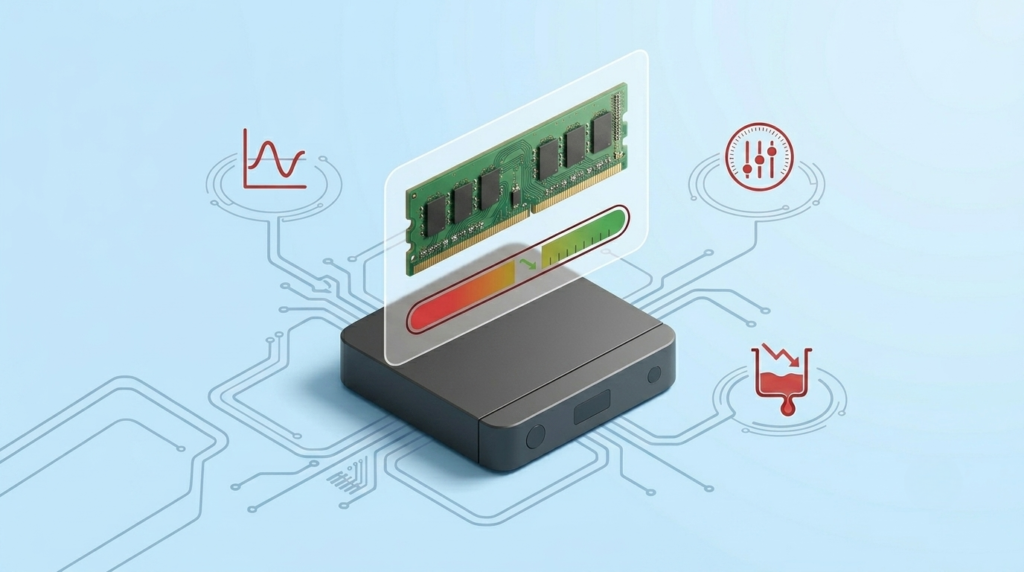
Linux TV and STB Performance Optimisation: A Practical Guide for RAM-Constrained Platforms
The investigative and optimisation approaches that reliably recover performance from RAM-constrained Linux platforms.

Articles
Extending the Golden Window of Your In‑Field Devices
Why sweating existing CPE is now the smartest move an operator can make.
Guides
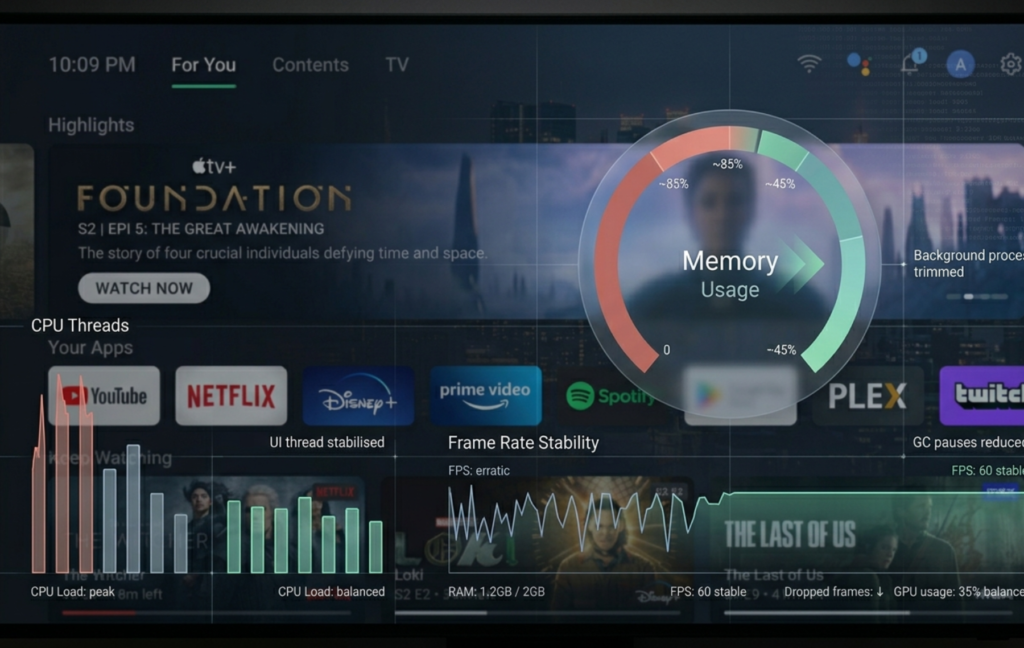
Android TV Performance Optimisation: A Practical Guide for RAM-Constrained Devices
This guide covers the approaches that reliably move the needle, from the first diagnostics you should run today to the deep engineering trade-offs that separate […]